Sample report
A complete Face Report, start to finish
This is the exact report a buyer receives, rendered live from real pipeline output rather than a mock-up. The score, the measured photo and the AI styling concept come first and every regional chapter and ranked action follows below.
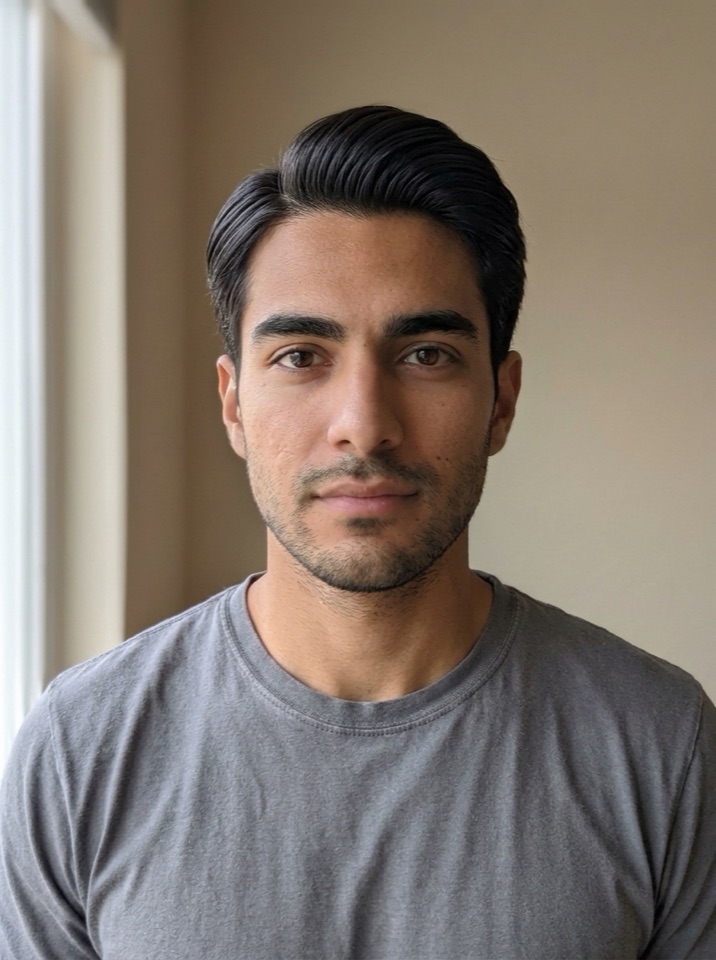
Synthetic subject: this face was AI-generated, not photographed. The report is real pipeline output.
LOOKSMETER · THE FACE REPORT
Glowing
Beats 71% of faces
Detection confidence: 92%
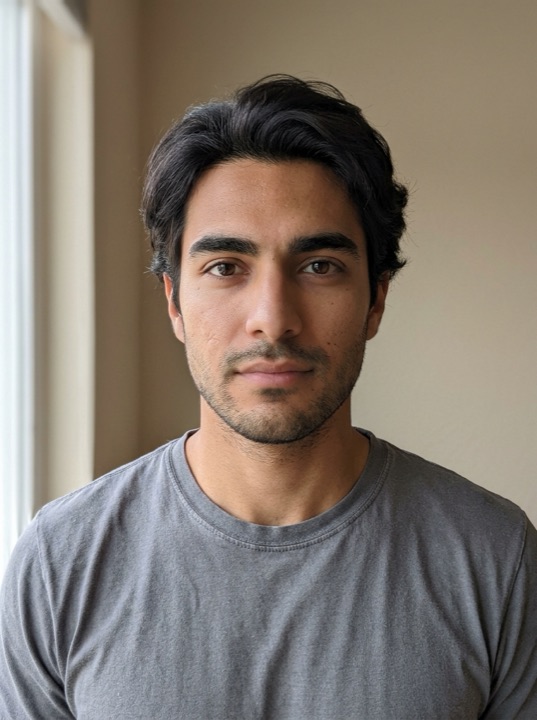
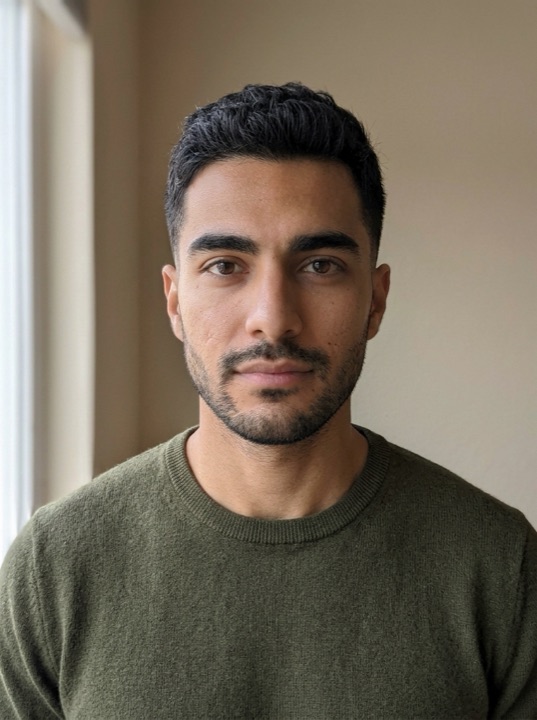
Your untouched photo with the report's measurement lines, beside the AI styling concept. Press and hold the concept to compare with your original photo. It changes hair, grooming, collar tone and light only - never your bone structure or features.
EXECUTIVE SUMMARY · OVERALL READ
Your strongest asset is the upper third and eye region, where balanced interpupillary spacing, a slight positive canthal tilt, and dense brow framing carry the first impression. Facial thirds and bilateral symmetry sit cleanly in range, leaving the lower third and jawline border as your highest-leverage area to sharpen through beard neckline geometry, side-taper hair framing, and posture.
Your report at a glance
The useful answer first. The measurements and regional evidence follow below when you want the detail.
Standout strength
Eyes & brow framing
Highest-leverage area
Jaw & lower third
Face shape
Oval (82% match)
First style to try
Textured crop with a tight skin fade
Colour season
Deep Autumn
Perceived age
26, typical guess 24–28
Do this first
Trim the beard line 1 cm higher on the neck (just above the Adam's apple) and square the cheek line. A sharper neckline is the fastest single move for jaw definition - you will see it in tomorrow's photo.
Start my plan ↓How to read this report
Scores are placement, not grades
Each number shows where your geometry sits inside a measured range. 10 is not a rigid template - balanced ranges are wide, and distinctive faces sit across them.
One photo, honestly used
Some traits cannot be measured from a front portrait - nasal projection, chin depth, true gonial angle. Where that is true, this report says 'not scored' instead of guessing.
Strengths are findings too
Regions that already sit in a strong corridor need no intervention. Leaving a strong feature alone is part of the plan.
Nothing here is medical
Zero surgical, injectable, or clinical procedures are recommended anywhere in this report. Skin notes describe this photo in this light, never a diagnosis.
Overview
Your photo is the evidence for every claim in this report. Your untouched portrait anchors the measurements, and styling previews are labeled wherever they appear.
What's working
Eyes with a positive canthal tilt and low upper-lid exposure - the single most noticed feature, already strong.
Naturally full brows that frame the eyes without grooming effort.
Facial thirds within a few percent of even - the balance people read as 'good-looking' before they notice any one feature.
Clear, even skin with no texture issues - every styling change lands on a clean canvas.
Your harmony profile
Each spoke is a core dimension of facial harmony, scored 1–10. The further the polygon reaches toward the outer ring, the stronger that dimension - the inward dent marks your highest-leverage area (jaw & lower third), where small presentation improvements lift the whole impression fastest.
Your face, mirrored
Your portrait reconstructed from its left side and from its right, reflected across your own landmark midline axis rather than a generic vertical crop. Overall symmetry 8.1/10 against a cohort median of 7.5.
No human face has identical halves. The subtle differences between these two composites reflect directional lighting, micro-expression and head pitch as much as bone.
Facial proportions
Measured on 478 landmarksProportions describe how your features share the visible face from the brow and hairline down to the menton. Reference bands show where balanced straight-on portraits typically land rather than a rigid single number.
The golden rectangle & proportional grid
Bizygomatic cheek width anchored to your chin with its classical φ (1.618) logarithmic spiral and horizontal facial bands. Select a band below the portrait to inspect it.
Overall symmetry
How evenly your left and right hemispheres align across your facial axis - balanced features read as composed in static photos.
Typical range 5.9–8.4, median 7.5 · ahead of 69% of scans
Eye level & orbital symmetry
How evenly your two eyes sit horizontally and vertically on either side of your nasal bridge.
Typical range 5.7–8.6, median 7.3
Eyebrow & upper-frame symmetry
How closely your brow arches match in height and tail taper - the fastest feature to refine with 2 minutes of grooming.
Typical range 5.8–8.5, median 7.4
Facial thirds balance
Your visible vertical thirds split 27% / 36% / 37% from forehead to menton.
Typical range 6.0–8.4, median 7.3
Horizontal fifths spacing
How evenly your face divides into five eye-width columns from temple to temple.
Typical range 6.8–8.4, median 7.6
Reference band 1.25–1.45 across straight-on portraits.
Within the balanced reference corridor, 0.95–1.06.
Your cohort position
Your marker shows where your geometry sits across LooksMeter scans.
Overall harmony
Ahead of 71% of scans
Overall symmetry
Ahead of 69% of scans
Strict PSL curve
Ahead of 72% of scans
In short: Hair with a little height on top visually lengthens the lower-third-short balance without changing anything else.
Eyes and brows
Measured on 478 landmarksThe orbital region carries most of a face's first-second impression - canthal tilt, aperture ratio, and brow framing decide how alert and composed you read.
Eye & canthal harmony
8.9 / 10, standout strength
Bilateral tilt parity
0.2° left–right variance
Within the positive reference corridor, +1.5° to +6.5°.
Within the balanced aperture corridor, 2.75–3.35.
Eyes are the anchor feature. Slight positive canthal tilt, low upper-eyelid exposure and a dense, well-shaped brow give the eyes a focused, deep-set read. Under-eye area is clear with minimal hollowing. This is the dimension carrying the overall score.
In short: Protect the asset: sleep, hydration and a light under-eye SPF keep this where it is for a decade.
Nose and midface
Front photo: width and symmetry onlyA frontal portrait supports alar width, bridge centering and midface height readings only. Dorsal projection and nasolabial angles require a 90° lateral view - this report never guesses what a front lens cannot see.
Nose & midface score
7.9 / 10, balanced
Dorsal projection & bridge profile
Not scored - needs a side photo
Nose and midface in proportion. Nasal width matches intercanthal distance and the dorsum is straight. Midface length is average with visible cheekbone presence under even light. Nothing here competes with the eyes for attention, which is what you want.
In short: Nothing to change - avoid side-lit selfies that exaggerate midface length.
Lips and lower-third balance
Measured on 478 landmarksLabial harmony comes from the vermilion span relative to nasal base width and how the philtrum-to-chin ratio anchors the lower third - not absolute lip volume.
Lips, skin & brow polish
7.6 / 10, balanced
Ricketts E-line protrusion
Not scored - needs a side photo
Within the balanced lower-third corridor, 1.95–2.35.
Clear skin, defined brows, lips slightly dry. Skin texture is even with a mild T-zone shine. Brows are naturally full and only need edge cleanup. Lips show slight dryness and the vermilion border is a little undefined, which flattens the lower face in photos.
In short: A nightly lip balm and a mattifying moisturiser in the morning are two-minute fixes that photograph immediately.
Jaw and chin
Front-view ratiosFrom the front this report reads bigonial taper, vertical lower-third share and symmetry - how the mandible frames the lower face - rather than lateral gonial angles that require a 90° profile.
Jawline & chin score
6.4 / 10, highest-leverage area
True gonial angle (°)
Not scored - needs a side photo
Within the reference band, 1.80–2.05.
Reference band 32.0%–35.0% of visible face height.
The lower third is the highest-leverage area. Jaw definition is soft along the lower border and the gonial angle is rounded rather than squared. Chin projection is slightly behind the ideal line in profile. Submental fullness is mild and reads as presentation (posture, water retention, beard line) rather than structure - which is exactly why it is the best place to spend effort.
Plan move 1 · targets jaw & lower third
Sharpen the jaw with the beard line and posture - This dimension sits 1.5+ points below the rest and most of the gap is presentation. Fixing the outline of the lower face lifts the overall score more than any other single change.
In short: A higher, sharper beard neckline plus forward head posture correction will lift this dimension more than anything else on the list.
Skin
Observed in this photo, not clinicalThese are cosmetic observations of your portrait in this lighting - useful for tracking routine progress over 4 weeks, never a medical diagnosis.
Where your skin reads slightly warmer than your own baseline cheek tone.
WHERE IT SHOWS MOST
Smoothness
85 Strong
How smooth and refined your surface texture reads in this light - the fastest metric to lift with a consistent evening retinoid.
Tone evenness
81 Strong
How uniform your skin tone reads from forehead across the malar cheeks to the chin.
Under-eye
85 Strong
How rested your orbital tear-trough reads - less shadowing and fluid pooling keeps focus on your canthal tilt.
Retest right. Same window light, same 65 cm distance, neutral expression - three to four weeks after starting the plan. Progress judged in matched photos is real; progress judged in the mirror is mood.
In short: The most movable scores in this report live here, which is why the daily routine compounds fastest on skin clarity and orbital freshness.
Hairstyles on your photo
Top 3 try-ons matched to your oval shape · 50-style catalogYour Top 3 cuts below are selected from our 50-style catalog for a oval perimeter (1 recommended cut, 1 safe alternative, and 1 lower-maintenance option). Each card shows a pre-generated AI demo portrait and includes 1-click AI generation on your own photo.
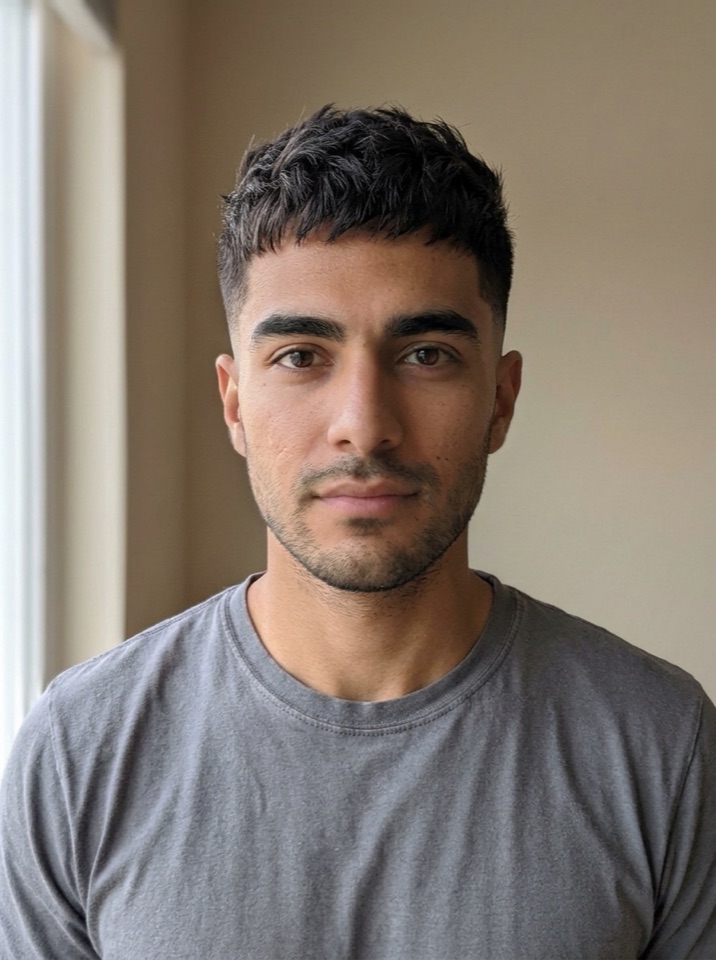
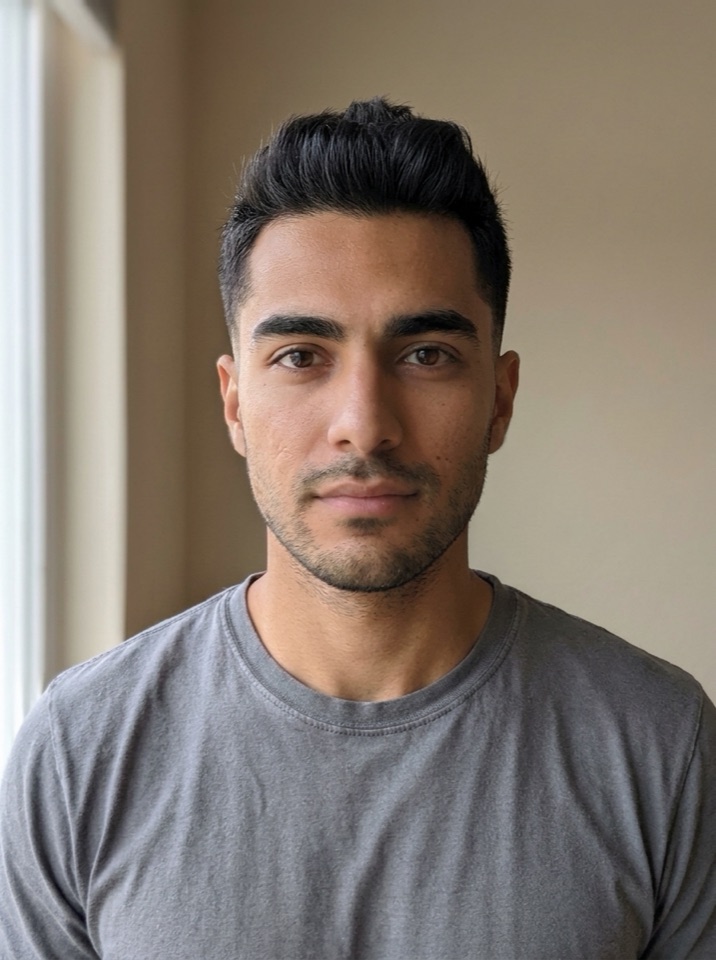
Want to test more than your Top 3 cuts?
Your Face Report includes AI try-ons for your Top 3 matched cuts. Unlock all 50 Women's & Men's hairstyles + 16 salon hair colors in the dedicated AI Hairstyle Studio.
Facial hair specification: Short boxed beard with a high, sharp neckline - the single best frame for a soft jaw border.
In short: Pick by the maintenance line, not just the silhouette: the cut you will actually style every morning beats the cut that only works in a salon chair.
Colour season: Deep Autumn
Measured from photo tonesSeason is shorthand for three attributes of your colouring - undertone, value and contrast - and decides which collar-level colours make your skin read clearest by default.
Undertone
Warm
Metals
Gold
Palette family
Deep Autumn
Wear these near your face
These shades harmonize with your warm undertone and eye contrast, letting your jawline and orbital framing read vibrant rather than washed out by the fabric.
Espresso
#3B2A1E
Olive
#5F6B3A
Rust
#B5552B
Mustard
#C99A2E
Forest
#2F4A3A
Burgundy
#6B2232
Camel
#B08A5A
Cream
#EFE6D2
These fight your colouring
Shades that clash with your undertone near the collar can cast grey or sallow reflections onto the lower third. Keep them to lower-body pieces or accessories.
Icy pink
#F3C9DC
Cool grey
#A9B0B8
Pure white
#FFFFFF
Neon blue
#2E7CF6
Your ranked plan
Ordered by visible payoff for the effort. Each move names the measurement it targets, its upkeep, and how confident the analysis is.
Sharpen the jaw with the beard line and posture
Targets jaw & lower third
This dimension sits 1.5+ points below the rest and most of the gap is presentation. Fixing the outline of the lower face lifts the overall score more than any other single change.
Move the beard neckline up to just above the Adam's apple and keep it crisp weekly.
Square the cheek line slightly below the cheekbone instead of letting it fade naturally.
Chin tucks: 3 sets of 10 daily to correct forward head posture - the jaw reads sharper within two weeks.
Cut sodium after 6 pm on photo days - mild submental water retention is visible in your lighting.
Type
Grooming
How often
Weekly
First signal
A cleaner jaw outline in photos within 7–10 days
Effort
low
Estimated lift
+0.4 pts
Confidence
High
Why first: Lowest effort, highest return: the neckline alone is a 10-minute job and removes most of the softness the camera is picking up.
Add height on top to balance the lower third
Targets proportions · jaw & lower third
A textured crop with height lengthens the visual face and draws the eye up to your strongest feature, while a skin fade removes width at the jaw where you least want it.
Ask for a textured crop, 4–5 cm on top, with a mid-to-high skin fade.
Style with a matte clay, pushed up and slightly forward - no shine.
Keep the fringe off the forehead - a covered forehead shortens the face further.
Type
Styling
How often
One-time, then every 3–4 weeks
First signal
Immediate - the first haircut
Effort
low
Estimated lift
+0.2 pts
Confidence
High
Define the lips and mattify the T-zone
Targets lips, skin & brows
Dry, under-defined lips and forehead shine both flatten the face in photos. Both are two-minute daily habits.
Lip balm with SPF every morning, a thicker balm at night.
Swap the moisturiser for an oil-free, mattifying formula in the morning.
Blotting paper before photos - never powder.
Type
Skincare
How often
Daily
First signal
Noticeably cleaner photos within a week
Effort
low
Estimated lift
+0.1 pts
Confidence
High
Groom the brows to a matched arch
Targets symmetry
The left brow arches slightly higher - the one visible asymmetry, and the only one that is free to correct.
Tweeze only strays below the brow line - never thin the body of the brow.
Brush up and trim any hair longer than 1 cm.
Match the arch peak of the right brow to the left - a barber can do this in five minutes.
Type
Grooming
How often
Every 2 weeks
First signal
Immediate
Effort
low
Estimated lift
+0.1 pts
Confidence
Moderate
In short: Everything else in this report is evidence - these 4 moves are the output.
Daily routine
Skincare, in order
Key ingredients
Niacinamide (4–5%) + Zinc PCA to balance T-zone shine and refine pore light reflection around the nose
Broad-spectrum SPF 50 fluid every morning to lock in warm-undertone evenness
Retinoid (Adapalene 0.1% or Retinal) 3–4 nights a week to smooth cheek and glabella micro-texture
Caffeine 5% + Peptide orbital serum in the morning to reduce transient tear-trough puffiness
Training and habits
Exercises
Posterior palatal tongue seal (lips closed, teeth 1–2 mm apart, nasal breathing) to tighten submental soft tissue under the jaw
Cervical posture alignment (ears stacked over shoulders) to eliminate forward-head neck compression in photos
Slow masseter and glabella release before sleep to reduce asymmetric resting jaw tension
Habits
Consistent morning SPF 50 application to prevent UV-induced pigment shifts
Morning hydration + potassium-rich whole foods to minimize overnight periorbital and jawline fluid retention
Back-sleeping with 10° pillow elevation to avoid unilateral cheek compression
Grooming
Tidy the beard neckline and cheek line.
Brush and trim brows, removing strays below the line.
Take one front-facing progress photo in the same light.
Frames for your face shape
For your oval face: choose frame geometry that complements your bizygomatic width without crowding the orbital trough.
Your glow-up plan
The day-to-day side of the report: your architectural Face DNA, the first 72 hours, a four-week program, strict PSL rubric, and camera/collar reference guides.
Your face anchors around a 82% oval perimeter led by eyes & brow framing. Because your foundational orbital and midface ratios already sit inside balanced reference bands, your highest-return improvements are presentation refinements rather than structural corrections.
WHERE YOU LAND
You 7.9 · GlowingPotential 8.6 · Striking
Raw landmark geometry
Measured in your browser from 478 MediaPipe landmarks. What each measurement means →
Five moves over the next three days to clear transient puffiness, stray brow hairs, and lens distortion so your baseline structure reads clearly right away.
Trim the beard line 1 cm higher on the neck (just above the Adam's apple) and square the cheek line.
A sharper neckline is the fastest single move for jaw definition - you will see it in tomorrow's photo.
Do a 30-second posture reset every time you sit down: ears stacked over shoulders, posterior tongue sealed on the palate, shoulders dropped.
Prevents self-inflicted submental foreshortening under the chin in both conversation and camera lenses.
Brush brows upward and outward with a clean spoolie morning and night, trimming only stray hairs outside the natural arch.
Your eye region (8.9/10) is already a primary anchor - clean brow borders make that symmetry immediately visible.
Pull your top Deep Autumn shades (Espresso, Olive, Rust) to the front of your closet for collar-level layers.
Harmonizes fabric reflection with your warm undertone so skin reads clearer without changing lighting.
Capture your Day-3 matched-light reference photo at 65 cm facing a daylight window.
Gives you a controlled focal-length baseline to compare against at Week 4.
What this report will never do
Recommend cosmetic surgery, fillers, or injectables - anywhere, in any section.
Rank you against a single ethnicity-based ideal, or compare your identity against someone else's face.
Fabricate 3D lateral depth measurements (like true gonial angle or nasal projection) from a 2D front photo.
Alter your untouched baseline portrait - every styling visualization is explicitly labeled.
The Face Report scores on its own 1–10 harmony scale, calibrated to describe what is working and where effort pays off. Every recommendation is presentation and habit based - nothing here is medical, surgical or a diagnosis. How the analysis works →
Report facts
The Face Report at a glance
QUESTIONS ABOUT THE SAMPLE
Frequently asked questions
Is this a real report or a mock-up?
It is genuine pipeline output. The portrait was run through the exact same browser-based 478-landmark MediaPipe scanner, proportional geometry calculator, written analysis and AI Style Preview generator that every buyer's photo goes through. The only difference is the subject: an AI-generated face, so nothing here is anyone's private data.
Who is the person in the sample?
Nobody. The portrait was synthetically generated rather than photographed, so there is no real individual behind it and no likeness to protect. His measured score (7.9/10, High-Tier Appeal) sits close to the upper-middle range of people who unlock the report, showing realistic strengths alongside actionable leverage.
Will my report look like this?
Yes. The chapters, radar chart, mirror composites, Golden Rectangle inspector, regional landmark crops, skin reflectance map, haircut blueprint cards, colour swatches and ranked action plan are identical - computed from your own uploaded photo.
What do I get for free before deciding to unlock the full report?
Start with the free scan in your browser, which never uploads your photo for the landmark measurement step. You receive your 1–10 Face Score, strict PSL bell-curve score, all six harmony dimension scores, your primary face shape, and your interactive on-photo landmark overlay before deciding anything.
Why do some rows say 'Not scored - needs a side photo'?
A single front-facing portrait accurately measures 2D widths, vertical thirds, roll-corrected canthal tilt and bilateral symmetry, but it cannot see 3D anterior-posterior depth (such as true mandibular gonial angle in degrees, nasal dorsal projection or Ricketts E-line). Rather than guessing from a frontal lens, we mark those rows honestly and offer a dedicated Side Profile Analyzer for 90° lateral photos.
Can I save my report as a PDF or ask follow-up questions?
Yes. Every unlocked report includes a permanent private link, a dual-tone Print / Save as PDF layout formatted for clean paper export, an interactive Ask AI coach grounded in your measurements, and a 14-day money-back guarantee.
Your turn
Same report, your face.
The free scan runs in your browser and takes a few seconds. Your 1–10 Face Score, strict PSL score, all six harmony dimensions and your face shape are free before you decide anything.